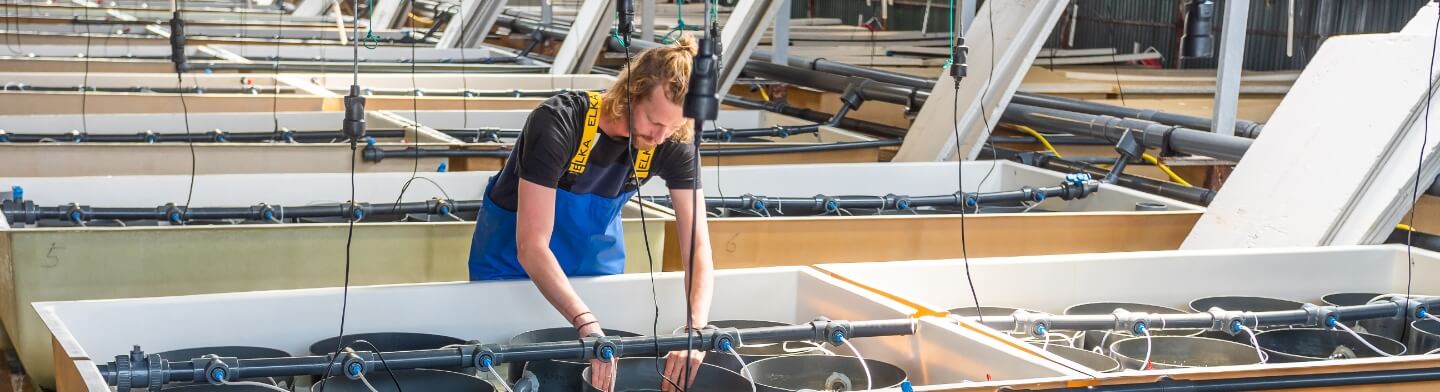
The micro-nursery

Micro-nurseries receive larvae from larval breeding.

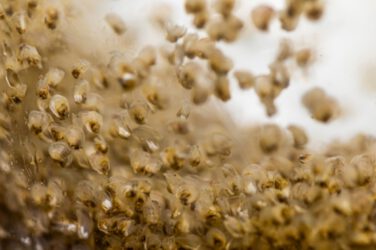
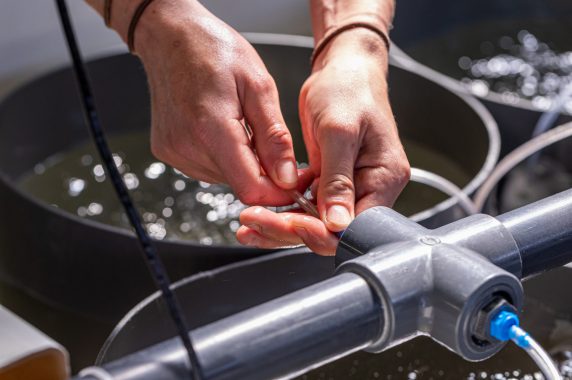
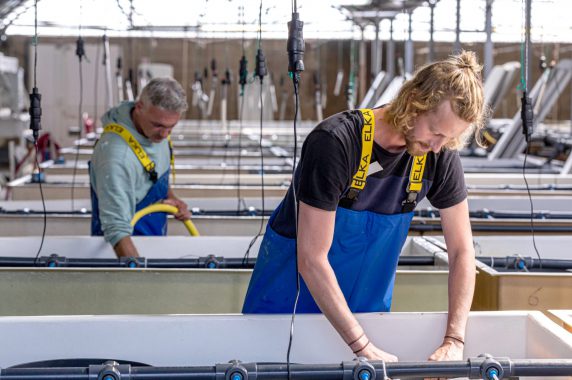
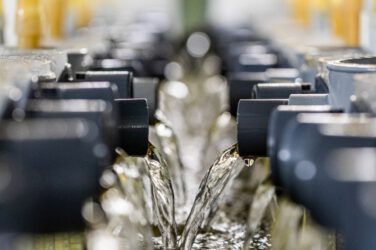
These developed larvae, called pediveligerous eyed larvae, due to the appearance of a small black dot resembling an eye, continue their development within the micro-nurseries. They will metamorphose there, in pools supplied with filtered sea water, supplemented with phytoplankton for adequate nourishment.

The metamorphosis allows the larva to transform into a real small shell, the micro-spat. This will remain in micro-nursery breeding until its size allows it to be raised in good conditions outdoors, within the nurseries.

ℹ️ During this step, in order to obtain so-called “one by one” oysters, we breed the larvae, seeking their metamorphosis and settlement on their rock, in the presence of oyster shell powder. This microbroken powder, made of flakes less than one millimetre in size, allows each larva to find its flake (its rock) and attach itself to it!
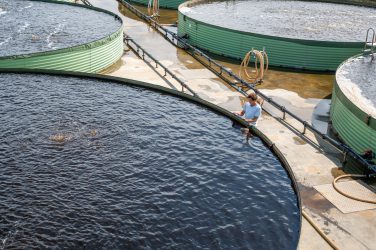
Selection of the best breeders
Quality of shells: form, colour, mother of pearl, flesh, etc.
Resistance A high survival rate
Availability Our clients' requirements are ours
Manage my cookies
Marinove

Personalise your choices according to the different purposes explained below. We will keep your choices for 6 months, then we will ask you the question again. You can change your mind at any time by clicking the "Manage my cookies" link at the bottom of each page. "Technical" trackers are essential for the function of the site and cannot be deactivated. For more information, consult our personal data management policy.

Strictly Necessary Cookies

Strictly Necessary Cookie should be enabled at all times so that we can save your preferences for cookie settings.

Third party cookies

This site uses Google Analytics to collect anonymous information such as the number of visitors to the side and the most popular pages.

Keeping this cookie enabled helps us to improve our website.